Key Engineering Takeaways
- Commercial restaurant kitchens must install municipality-approved grease traps before discharging into public sewer networks.
- Potable water distribution lines must undergo mandatory 10-bar hydrostatic hold tests for a minimum of 2 hours.
- Gravity drainage pipes require strict gradients: 1:50 for 50-75mm waste and 1:100 for 110-160mm soil lines.
- Al Sa'fat Green Building regulations mandate certified low-flow aerators and sensor-activated faucets.
The Critical Role of Certified Commercial Plumbing
While electrical approvals often grab headlines, plumbing and drainage failures are responsible for some of the most expensive fit-out rectification costs in Dubai. A single failed pipe weld inside a false ceiling void can ruin luxury retail inventory or shut down a dining room during peak revenue hours.
1. Potable Water Piping: Material Standards & Fusion Welding
In accordance with DEWA Water Regulations, potable water supply pipes must utilize certified non-toxic, non-corrosive materials:
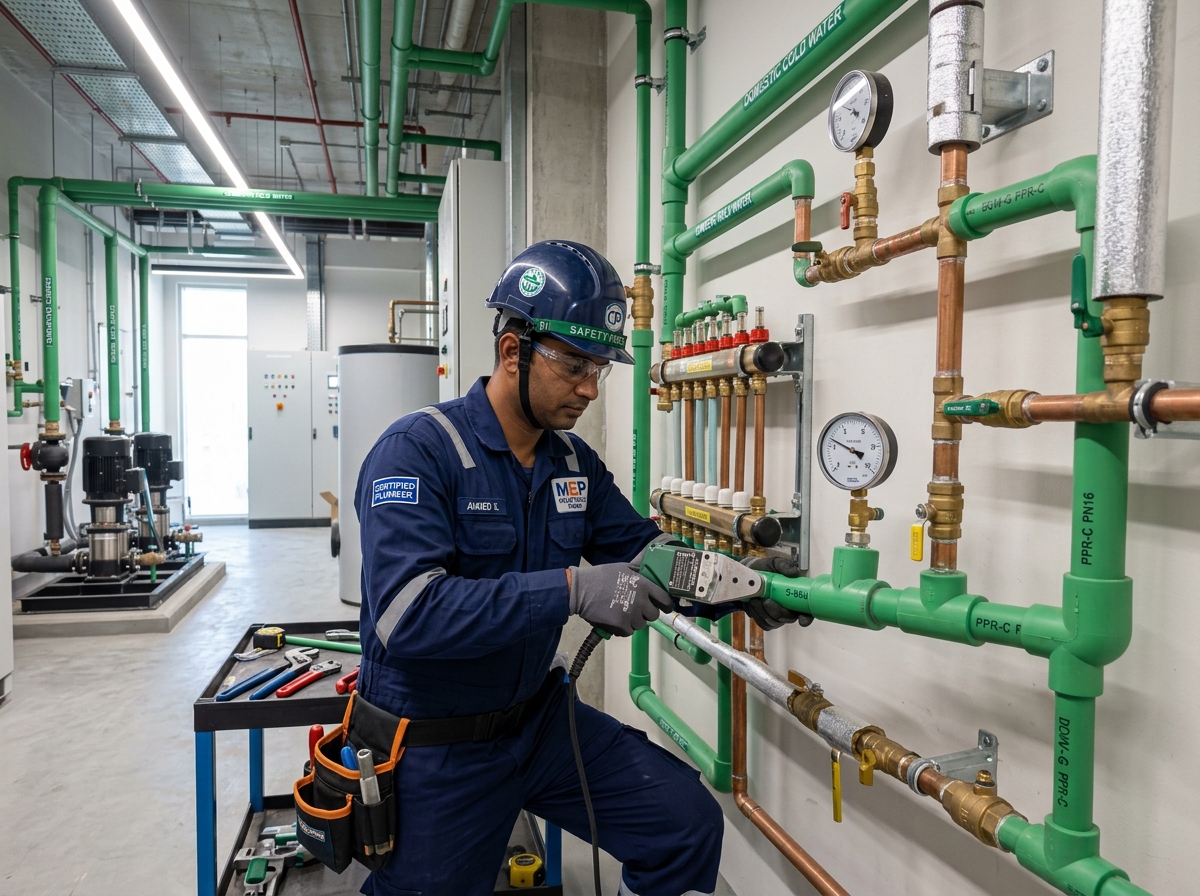
- Polypropylene Random Copolymer (PPR PN20): The gold standard for hot and cold internal distribution. Jointing must be executed using electronically regulated socket fusion tools at 260°C, creating a continuous monolithic weld without glue or chemical adhesives.
- Cross-Linked Polyethylene (PEX): Utilized in flexible conduit sleeves with central distribution manifolds for luxury residential bathrooms.
- Copper (Type K/L): Specified in commercial boiler rooms and exposed high-temperature industrial setups.
2. Commercial Kitchen Grease Trap Mandates
Dubai Municipality Waste Management Department strictly prohibits discharging fats, oils, and grease (FOG) into the municipal sewerage network. Every commercial kitchen, bakery, and cafeteria must install a properly calculated grease interceptor:
- Automatic grease recovery units (AGRU) or recessed stainless steel grease traps sized to peak fixture flow rates.
- Vent pipes routed through the roof to prevent anaerobic odor buildup.
- Accessible floor cleanouts (FCO) within 1.5m of the trap inlet for routine vacuum pumping.
3. Hydrostatic Testing Protocols
Before any ceiling is closed or floor screed poured, Abbadi Tech subjects all water supply lines to a rigorous 10-bar hydrostatic pressure test. A calibrated pressure gauge is monitored for at least 2 hours. Any pressure drop indicates micro-leakage and triggers immediate inspection.
Have Questions About This Technical Topic?
Share your site drawings or premise ID with our senior engineers for an immediate consultation.